I am not entirely sure where it stemmed from, but as a child I was fascinated with Orca’s (Orcinus Orca: Killer Whales).
It may have been the 1977 movie ‘Orca- The Killer Whale’, starring Richard Harris, Charlotte Rampling, and a very young Bo Derek.
“Initially on the hunt for a great white shark, the obsessive Captain Nolan (Harris) accidentally kills a pregnant orca. Seeking vengeance, her mate begins to terrorise the nearby fishing village in a rampage of death and destruction. Realising that only he can bring an end to the carnage, Nolan sets out on a deadly quest to face his enemy from the deep…”
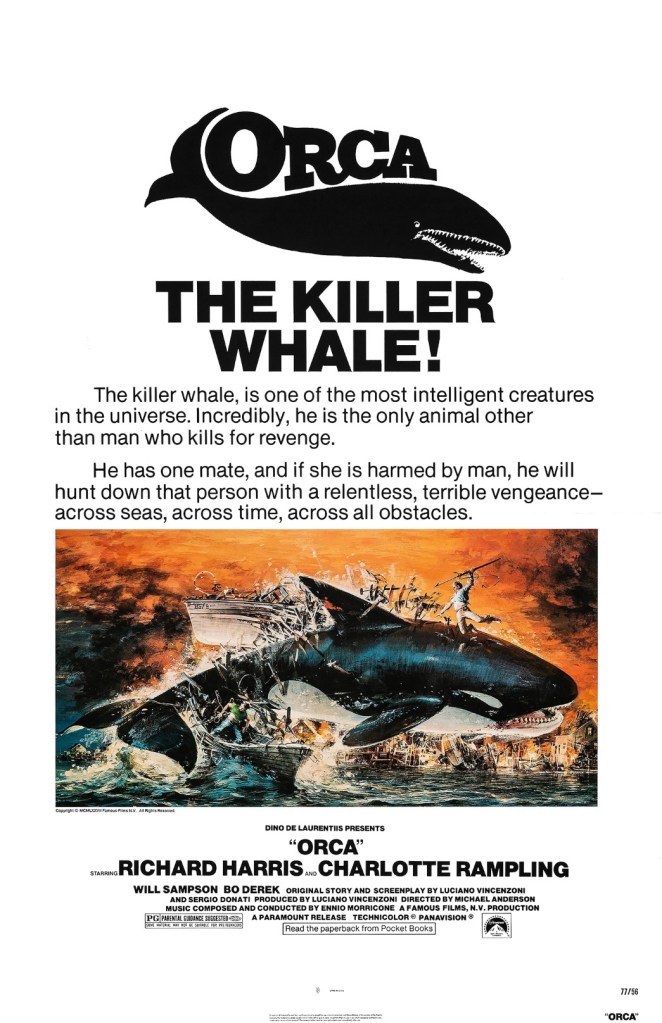
An interesting story, but also an odd movie choice for me to enjoy watching, while growing up in the 80’s. According to interviews from back in that time, the idea was to find a bigger and badder sea creature, to rival the movie Jaws, released in 1975. Jaws was a hit, and still enjoyed by many people today. Orca flopped, and therefore is not a very well known movie.
Anyway, somehow I developed a love for Orca’s. I used to find as much information as I could about them, draw pictures of them, and follow stories of certain pods that were around Canada and Alaska. To me, at that time, there was very little information or knowledge of Orca’s being around Tasmania and Australia, with the exception of them around Eden, in NSW. Between the 1860’s and 1930’s, three generations of Davidson’s ran a whaling station out of Twofold Bay, Eden NSW. A couple of interesting facts here:
- Davidson’s are my mother’s side, but not related.
- When I was a teenager (About 13 at the time), I spent a week on a fishing boat off the coast of Tasmania. The boat was called ‘Twofold Bay’.
- At the time, I was unaware of any of that history, or connection.
The family patriarch, Alexander Walker Davidson, emigrated from Scotland to the NSW colony in 1841 with his wife and seven children. After stints as a carpenter and publican, and then trying his hand in the gold rush, in 1861 Alexander eventually settled on the Kiah Inlet on the southern shores of Twofold Bay.
It is speculated that the Davidson’s close relationship with the local Thau people, which were used to crew the boats, was the key to their success. The Thau people enjoyed a special connection with Orca’s, and this was used to assist in hunting whales. The Orca’s would herd the whales into the bay to be harpooned.
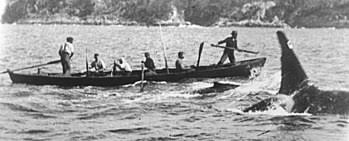
“The killers [orcas] were deadly enemies of the whales, and about June 1 each year, as regularly as clockwork, they came from the Antarctic and took up their posts, like soldiers on guard,” reported The Sydney Morning Herald in 1942. “They were all well known and each had his own name. The killers remained for about six months, patrolling the ocean… When a whale had been harpooned they ‘assisted’ in doing it to death.”
According to local legend, orcas would only collaborate with the Davidsons. In payment for their services, they were given the lips and tongues of the butchered whales. This would become known as “the law of the tongue”. The most famous orca was Old Tom – identified by his unusually tall dorsal fin – who assisted the family for decades. After Old Tom passed, his preserved skeleton was put on display at the Eden Killer Whale Museum.
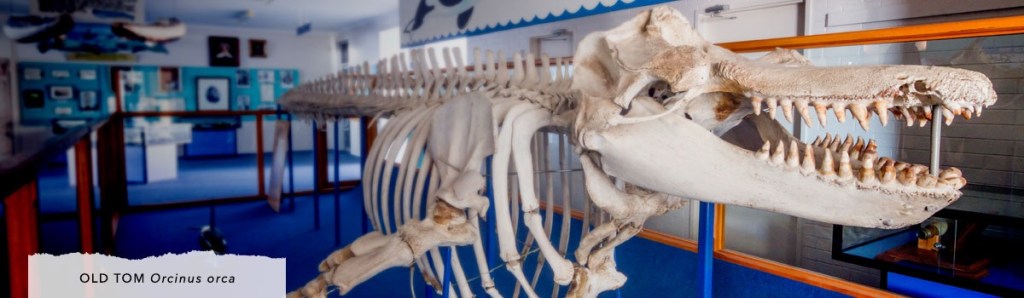
With all the sailing I have done, around Australia, and various parts of the world, I had never seen an Orca. I have seen plenty of whales, dolphins, sharks, sea snakes, turtles, whale sharks, but never a killer whale.
Also over the years I became aware of tourist operators; their growing businesses in coastal tours, mostly off Tasmania, and their increasing encounters with Orca’s off the south east coast of Tasmania. I kept saying to myself “One day I will do it.” Like many things in life, we keep reprioritising, and putting things off, “One day”.
For the most part I have been living in Western Australia since 2009, and even though I have toured a little bit of the state, I had never heard of Orca’s being part of tour operators off the coast. Then, in 2023 I was informed there were tour operators out of Bremer Bay, and depart during summer from January to mid April. I got a ticket for summer 2024, but again let other things get in my way, and missed that window.
As summer 2025 came around, I made sure I locked it in. I confirmed the booking on the boat, and then sorted accommodation. I was hoping to stay in a nice hotel for the weekend, but I had left my run a little late on that front and there was nothing available, so camping it was.
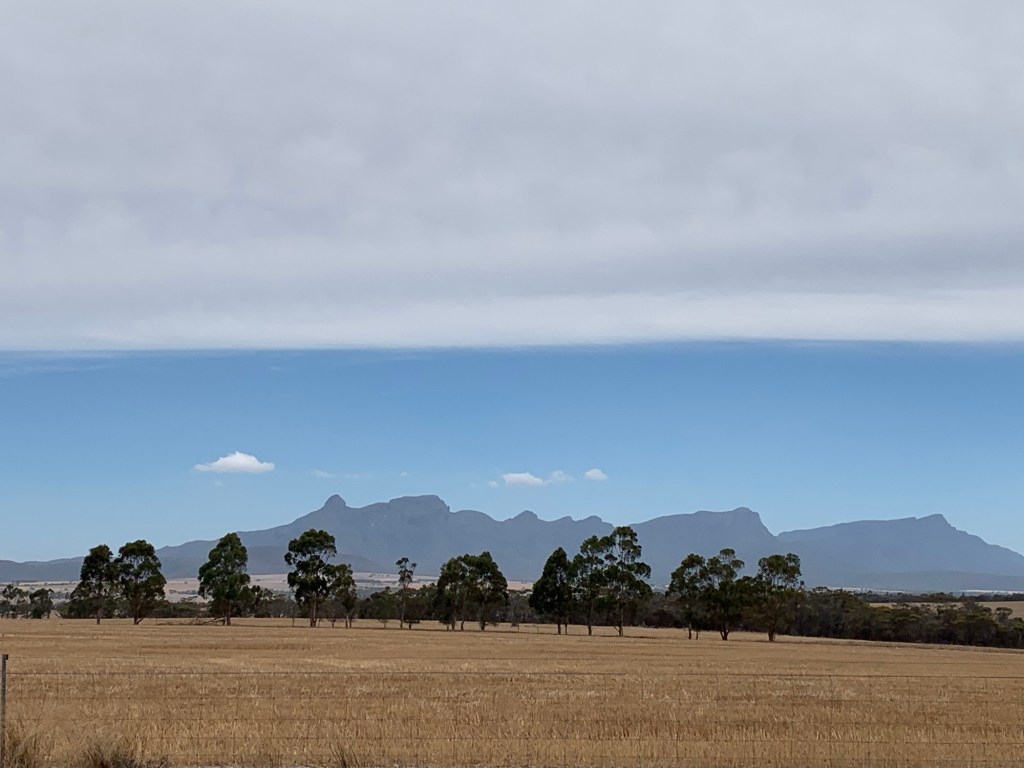
I set off on the 5 hour drive to Bremer Bay, and eventually arrived at the camp site on a property. There were a few others camping there as well. There were supposed to be toilets and showers, but just before setting off, the camp ground notified there were currently water restrictions and the showers were currently unavailable. I got settled in for the night, ready for the 8am departure on the boat the next morning.
I woke to the sound of some light rain, but it was no where near enough to top up any water tanks. I had a quick breakfast, packed up and headed to the marina. It was still pretty overcast, with some light showers around.
I walked down to the marina, and was greeted by some friendly crew members. After a short wait, all passengers were invited to board the boat, Steep Point. After the standard safety brief, the lines were cast off, and we proceeded out of the bay. It was roughly an hour transit out to the “Patch”, where the Orca’s spend most of their time in Bremer Bay between January and April each year due to a reliable food source.

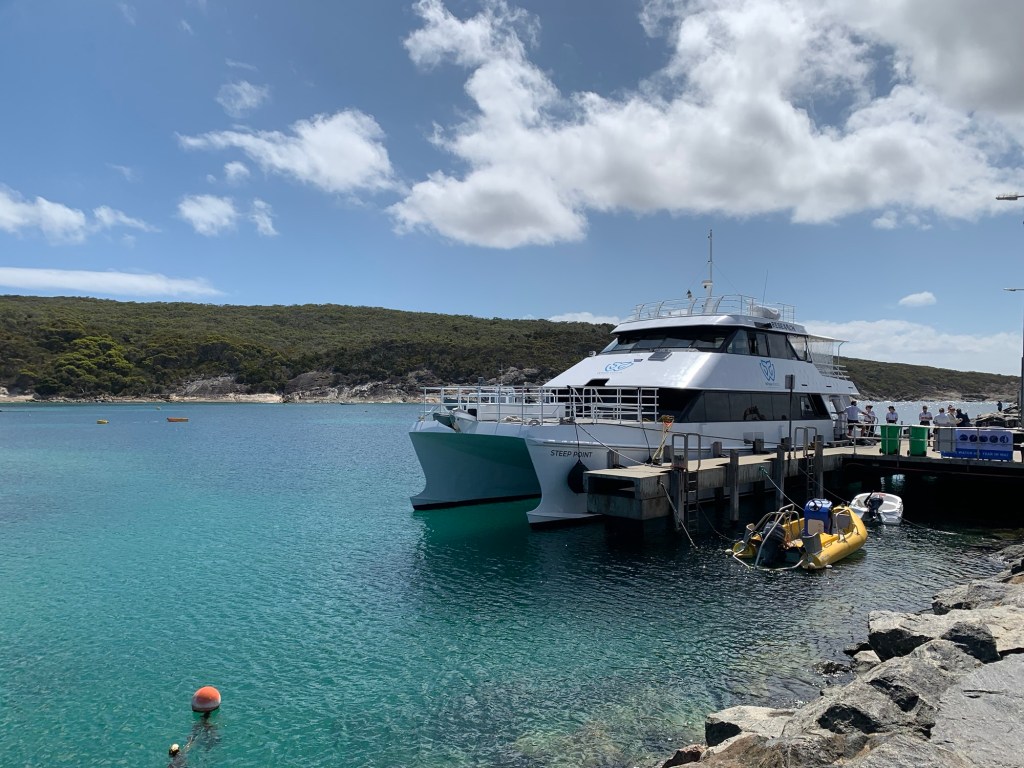
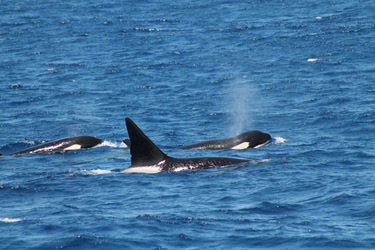
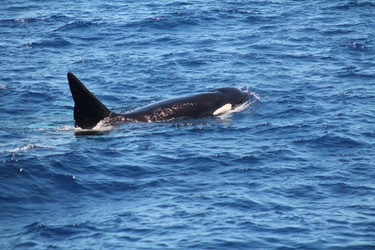
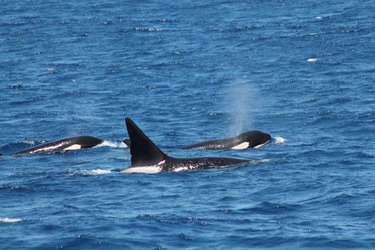
Pretty much an hour later, we arrived at the Patch and began a search pattern to locate an Orca pod. It did not take long, and soon enough the distinct dorsal fins could be seen gliding through the water. This particular pod that we came across was mostly female, and the matriarch is nicknamed Queen. The tour boat is operated by a family run company, and they have been conducting tours for nearly ten years. The crew are able to identify the Orca’s very quickly and easily, by distinct markings, cuts and scars of the Orca’s.


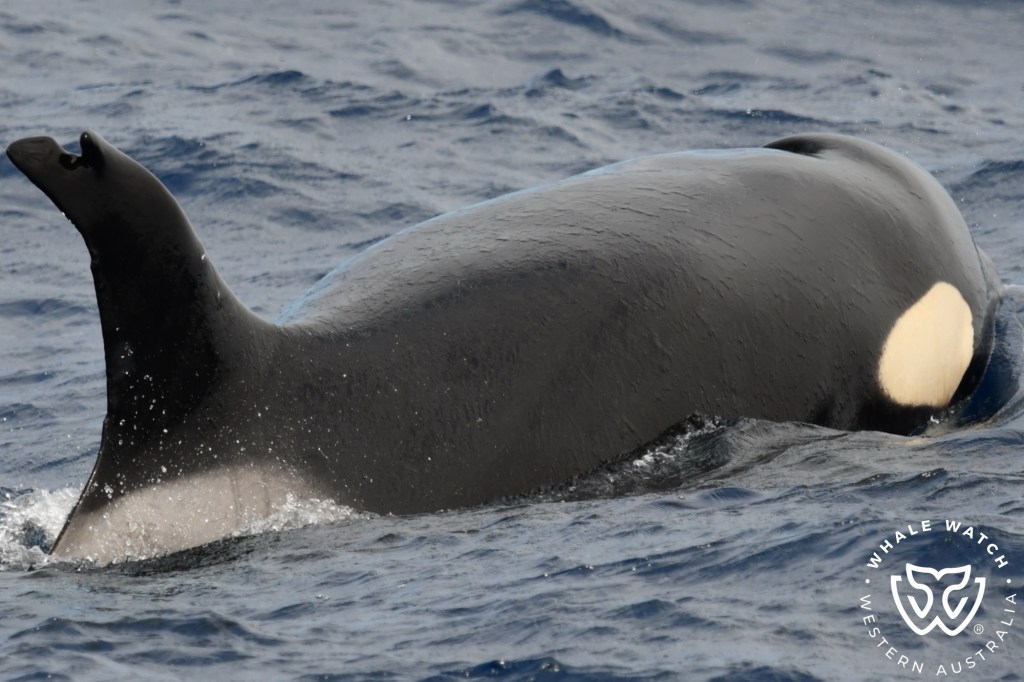
The crew were very informative throughout the day, they were all accommodating and friendly. There was also plenty of food, tea, and coffee available for the duration of the tour. The weather was reasonably good. There were a couple of people who suffered sea sickness.
We followed along with the pod, observing to see if they were hunting something, or just cruising around. We had been told the pod was very active the previous day, and had a good feed. As we followed along with the pod, it started to become apparent that they were basically having a relaxing day after their activity the day before. As much as I would have loved to have seen them in full action, it was wonderful to finally see them in real life.

 Sailing The Unknown