
The paths we take in life are curious, frustrating, painful, enlightening, spiritual, hurtful, amazing and beautiful. To quote Forrest Gump, “Life is like a box of chocolates, you never know what you’re gonna get.”
We have a fair idea of what we want out of life, but sometimes things happen that don’t go our way. We know there is that chance, but that’s the gamble of life. It is how we react and deal with those situations that define us.
Sometimes we find ourselves in situations that are clearly unfair, but there is nothing we can do to change them. Or, we may recognise that our chances of achieving a just solution are small, while the cost of pursuing it is likely to be high. Fighting an unwinnable battle may not be worth the time, effort, energy, stress or financial cost involved. When we weigh up our chances of success against the likely cost of failure, we might make a rational decision to let it go. Change your thinking, Sarah Edelman PhD.
ACCEPTANCE
This is how it is.
NOT HOW IT
-Was
-Might have been
-Should have been.
NOT HOW I
-Wanted it to be
-Hoped it would be
-Planned it would be.
I ACCEPT THAT THIS IS HOW IT IS
Now I get on with my life
in a positive way. Author Unknown
Everyone is different, and everyone has a completely different upbringing. How we are raised, and by whom we are raised has a massive impact on us later in life.
I was raised in a loving and empathetic household. My sister and I were treated fairly and equally by our parents. There was the typical sibling rivalry and jealousy but there was no favoritism. Unless you ask my sister, then she will say I was the favorite, and still am, haha. Throughout our upbringing we interacted with strong influential people, some were other family members, others were family friends. I was not excluded from some forms of trauma (nothing too serious) but the foundations for empathy and resilience were there. Therefore, making it more likely for me to weather hardship and adjust my behaviour. I’m not saying I always get it right, though.
I know of many people who were not raised in a loving family environment where empathy and understanding were pretty much non-existent. Where poor attitudes and behaviours were not dealt with equally, and non-intentional favoritism grew. Sibling jealousy flourished, exacerbating negative and attention seeking behaviour. Their upbringing was not given the opportunity to interact with strong influential people, and they were kept in a very small tight circle of family with very limited social settings. Those sorts of upbringing can also lead to varying forms of addiction.
Others have most likely suffered for years in an environment of unchecked behaviour which could create a very unsteady foundation for empathy and resilience, making it very difficult for them to be able to self-correct themselves later in life without a huge amount of professional support. They would find it very difficult to make friends and interact openly in social settings. They potentially lack confidence, their childhood difficulties manifest and grow making their envy and resentment of others worse.
Over the years I have felt hurt, and or betrayed by others actions. Now, here is the tricky part. We cannot change the way others treat us, and people can only emotionally hurt us if we allow them. Change is inescapable. We have no control over it. The only thing we have control over is our own responses to the change’s life has to offer. Having just written this, I am also mindful of the fact of the life most of us live. I recently read in a book Only a privileged person would say you can always change your life. In some countries people are not so lucky to be able to change their ways.
I used to be a jealous person and felt very hurt and upset if people rejected me. One of the greatest pains I felt turned out to be one of my greatest life lessons. When a long-term relationship ended, I was devastated, but I also wanted to learn and understand how she was so calm and understanding to me when I was displaying jealousy and resentment to being rejected. Whenever anyone asked me about her and or our relationship, my answer was always, She is a beautiful person, inside and out.
One day while talking and trying to understand the rejection, she said these words to me, I cannot make you happy, only you can make you happy. That sentence has stuck with me ever since, and that began my journey of understanding.
By no means has it been an easy road. It has been very bumpy, and at a later time in my life at the beginning of going through PTSD and depression, I found myself spiraling down that path again. Jealousy and resentment reared its ugly head again. The big difference that time was, what I had previously dealt with had helped further the foundations I already had, and I bounced back quicker and easier.
For years, I found myself wanting to understand why people act or behave a certain way; and then after dealing with PTSD and depression for years, I wanted/ needed to understand why my brain was not working the same as it used to. I considered studying psychology, but I couldn’t bring myself to commit to it. So, I stuck to doing my own research, instead of full-on study.
Within the first 12-18 months after the SIEV 36 incident, I was having dreams, or nightmares, as well as even during the day I would occasionally fixate on something like a car, truck or building and visualise it exploding. I hated it. I researched dream meanings and picked them apart trying to understand; I read books and articles on PTSD and depression, and the human brain when exposed to trauma. I wanted to know what was driving what I was experiencing, and how I could reduce the bad stuff. Understanding and acceptance of what I had experienced made everything a lot easier to deal with. Unfortunately, the other side of that was, the more I understood myself and what I needed, the more I got frustrated at other people who I could see were struggling, and who would not do anything to help themselves.
And that brings us back to our childhood and how each of us is raised. Not everyone has the foundations to be able to realise what they are doing to themselves, to others, and then correct that behaviour. I made changes in my life because I needed to, and because it was what I believed was in the best interests of those close to me.
I have, and have always had, an amazing support network. I will forever be grateful to those around me, and my children. I don’t think I ever truly appreciated that until a very low point in my life, and quite a few people said to me, We are right here with you, you’re not alone. It took time for those words to fully sink in, but when they did, I felt highly uplifted. I have never doubted myself, or the support I have, since. Recently, I was feeling a little down and my eldest child picked up on it. He said, You are loved more than you know. It was very sweet. But I said back to him, Love is something I know I never have to worry about, because I know how much I am loved by you, your brother and sister, and all our other family and friends. That also goes the same for you, please don’t ever doubt how much you are loved.
Punishment teaches a child only how to punish. Scolding teaches them how to scold. By showing them that we understand, we teach them to understand. By helping them, we teach them to help. They learn cooperation by cooperating.
My pathway to change for the better, came mostly from two areas, one was out of feeling rejected, the other was out of a need to understand myself. I never wanted to feel the pain of rejection again, so I made changes.
I like to collect books, and I like to look into things deeply that mean the most to me. I have quite a few really good books as part of my book collection. Some I have mentioned in other posts, and others I am still yet to read, and make a post about. The five listed below are extremely good reading, and I highly recommend them.
1: Change Your Thinking, Sarah Edelman.
2: The Happiness Trap, Dr Russ Harris.
3: Stolen Focus, Johann Hari.
4: The Resilience Shield, Dr Dan Pronk, Ben Pronk DSC, and Tim Curtis.
5: The Resilience Project- Finding Happiness Through Gratitude Empathy & Mindfulness, Hugh Van Cuylenburg.

I have tried to help people, and I’m not just talking about helping move a fridge or furniture, I’m not so handy with that these days, my back and shoulder hurt too much. I like to help people on an emotional level. I don’t like to see people hurting, so I felt a need to help them be more understanding of the world and circumstances around them. Am I a professional at it? No. Is it easy? No. As mentioned before, if people generally have the right foundations, they are more willing to accept help and do what is necessary to change for the better. If they don’t, then they are more likely to dismiss any form of help and blame others for their issues.
Empathy: It is easy to feel resentment towards people who say or do things we don’t like. It is much harder to understand them- their thoughts, their motives, their insecurities or their pain.
It is useful to remember that we are all trying to live, using whatever resources are available to us. Our resources include our cognitive style, our problem-solving skills, our social support, our innate sense of security, and self-worth and our ability to communicate and get on with people.
Empathy produces benefits for us as well as them. Change your thinking, Sarah Edelman PhD.
Forgiveness is not an occasional act; it is a permanent attitude. Martin Luther king JR.
I like to offer my life experiences, and what knowledge I have, to help others. In essence, show others what has helped me through tough times and hope that it helps them. This blog, to a high degree, was born out of a desire to help others. The positive feedback I receive from my posts has shown that I have been able to connect with a lot of people and help them in some way. It is quite humbling.
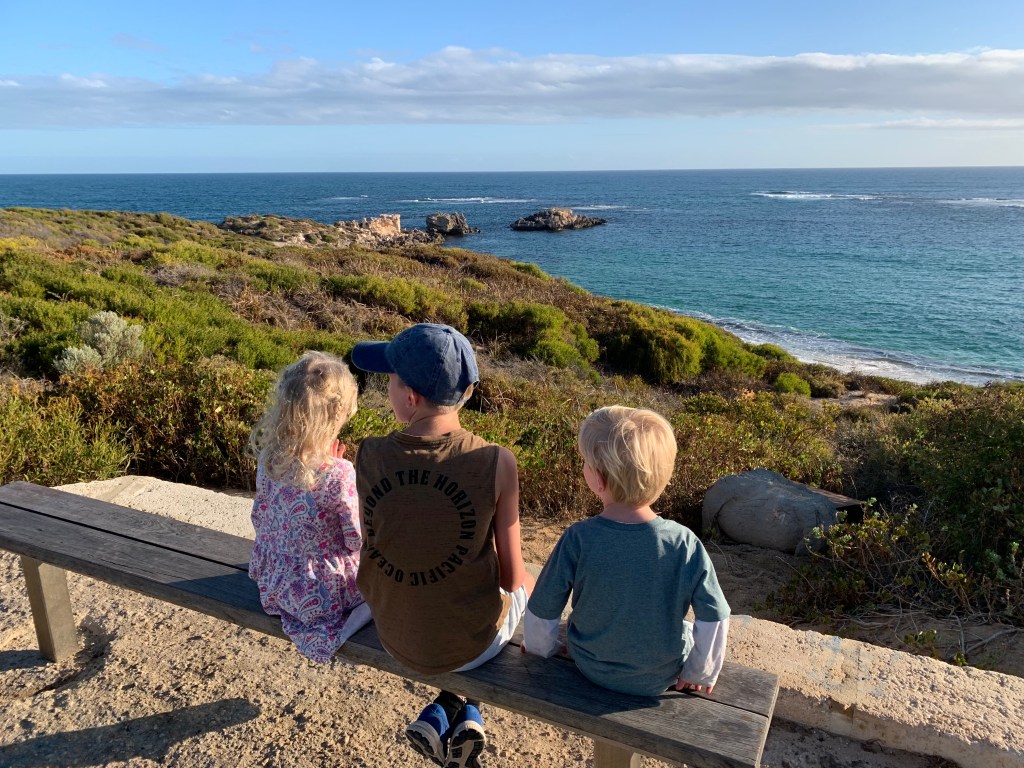
Always stay humble and kind. Empathy and gratitude go a long way to making your own life, and those who are most important to you, a much happier place.
Make a positive change today.

 Sailing The Unknown