Test the waters
I had regular sessions over several months with the senior psychologist until she was satisfied for me to make steps getting back to sea.
I was never offered promotion to Petty Officer on completion of the promotion course. Attempts were made to still get me to join TSE but it was strongly advised against. Eventually a compromise was made and I was sent to Darwin several times for a few weeks at a time to help instruct the TSE classes coming through. It worked out well for Shayne and I because she was in Darwin and we got to live with each other while I was there.
My Chief had moved on and joined a warship. He was keen to have me on board and arrangements were made through the psychologist for me to join the ship towards the middle of 2013. Everyone involved agreed it would be beneficial for me to join a warship, rather than a patrol boat, especially where my boss knew my history and what I was going through. If, for whatever reason, I didn’t feel right then I could be replaced by another member of ship’s company; patrol boat crews don’t have that luxury.
My only request when joining the ship was that I be flown home from wherever we were so I could be there for the birth of my first child. I was told it wouldn’t be a problem and I joined the ship in May 2013, sailing that day for border protection operations.
Off to sea
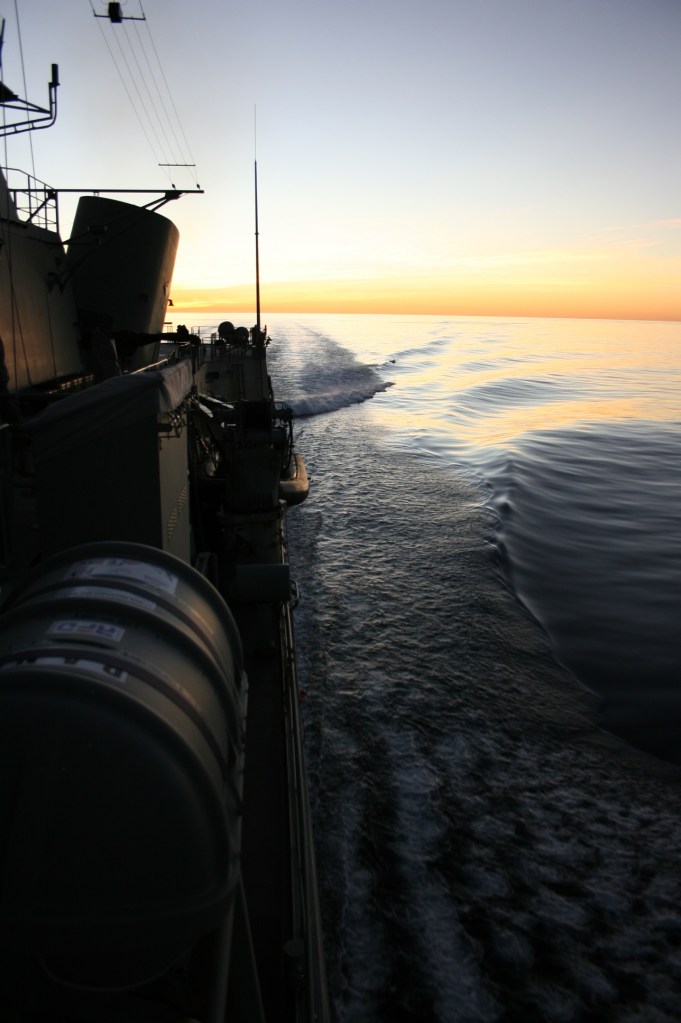
As we sailed up the west coast of Australia bound for Christmas Island we conducted a fair bit of training. Pretty much as soon as we arrived at Christmas Island we were straight into conducting boarding operations. It was at a time when asylum seekers were flooding in to the country, and from the moment we arrived we barely got any rest as we conducted boarding after boarding.
For the most part I felt fine, a little reserved from leaving a pregnant fiancée behind, but otherwise not too bad. On one occasion I was asked to oversee a RHIB coxswain during a boarding one day to make sure they were competent. I went out with the RHIB when the boarding team were inserted on to a SIEV and sat with the RHIB coxswain just chatting and observing. The boarding was going well and there was nothing to worry about but for some reason I started to feel uneasy.
The RHIB was recalled back to the ship to pick up some supplies for the boarding team, so I took the opportunity to get off. As I was climbing back up the ladder my Chief asked if everything was alright and I said, “Fine, he’s a good coxswain and doesn’t need me to stay out there”. I then disappeared back to my cabin.
It was later that night, or the next day, I actually told him that I just felt a little uncomfortable but otherwise I was good. I was advised to inform command who in turn basically benched me. I protested, saying, “If you’re going to stop me from doing my job there is no point in me being here and you might as well send me home”. They allowed me to continue doing my job but I was on a very short leash.
For the rest of the deployment until I flew home for the birth I noticed I was not very patient and was getting agitated very easily. There were a couple of times I spoke my mind or had a go at people when I would normally keep my mouth shut.
A family created
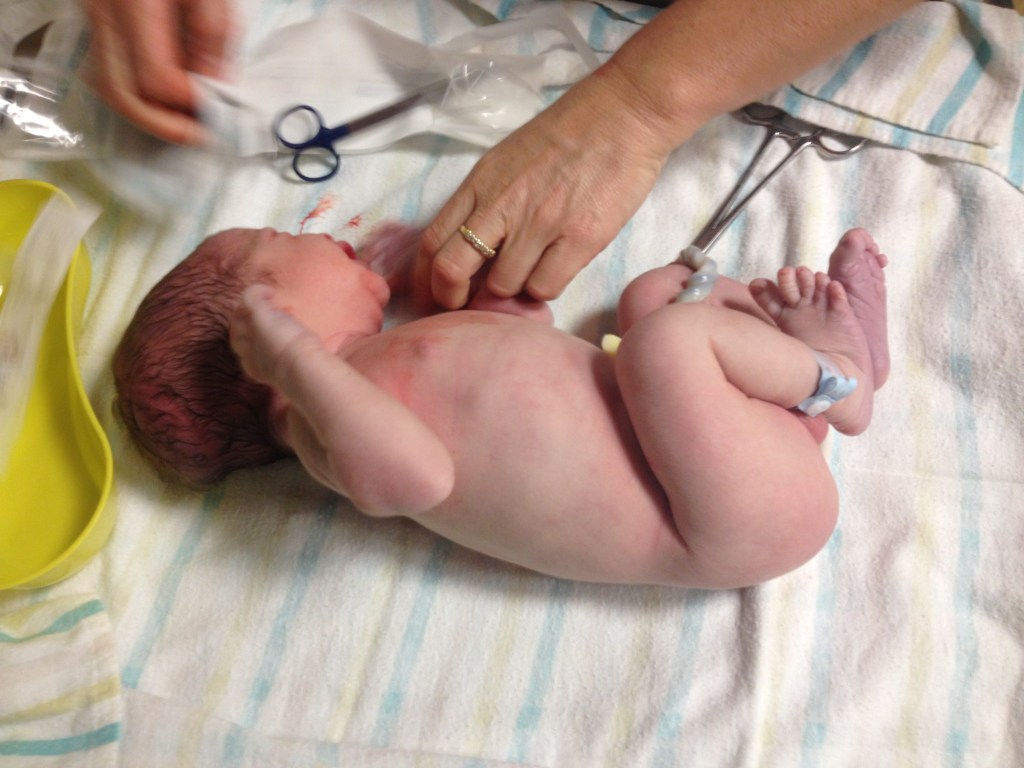
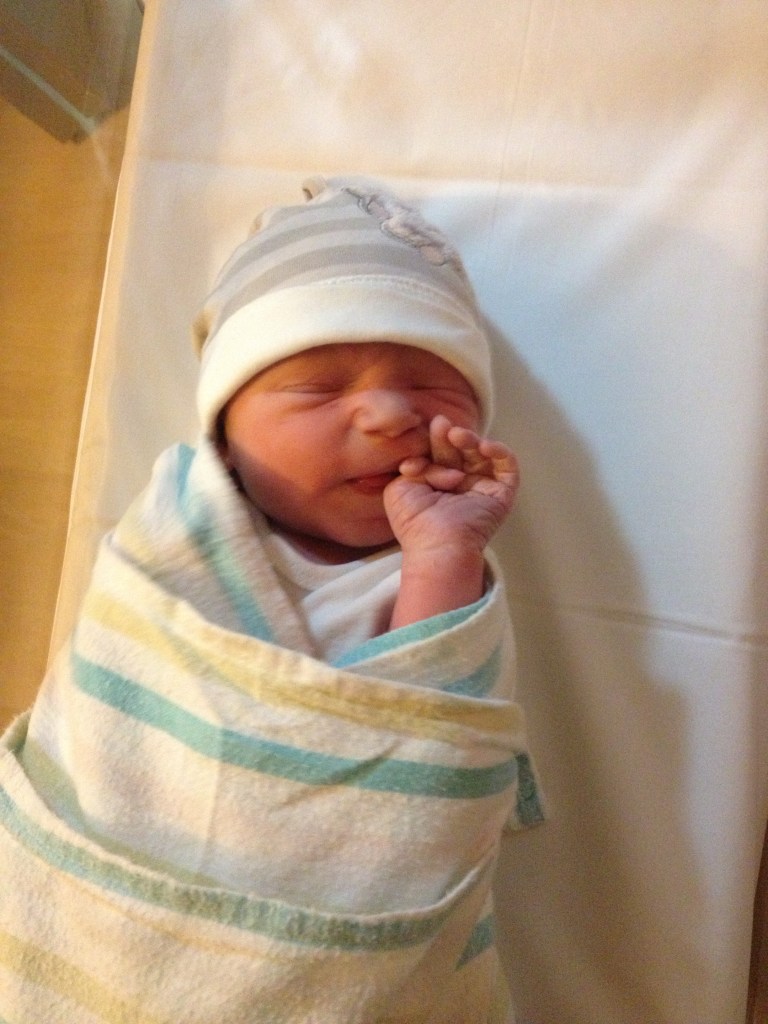
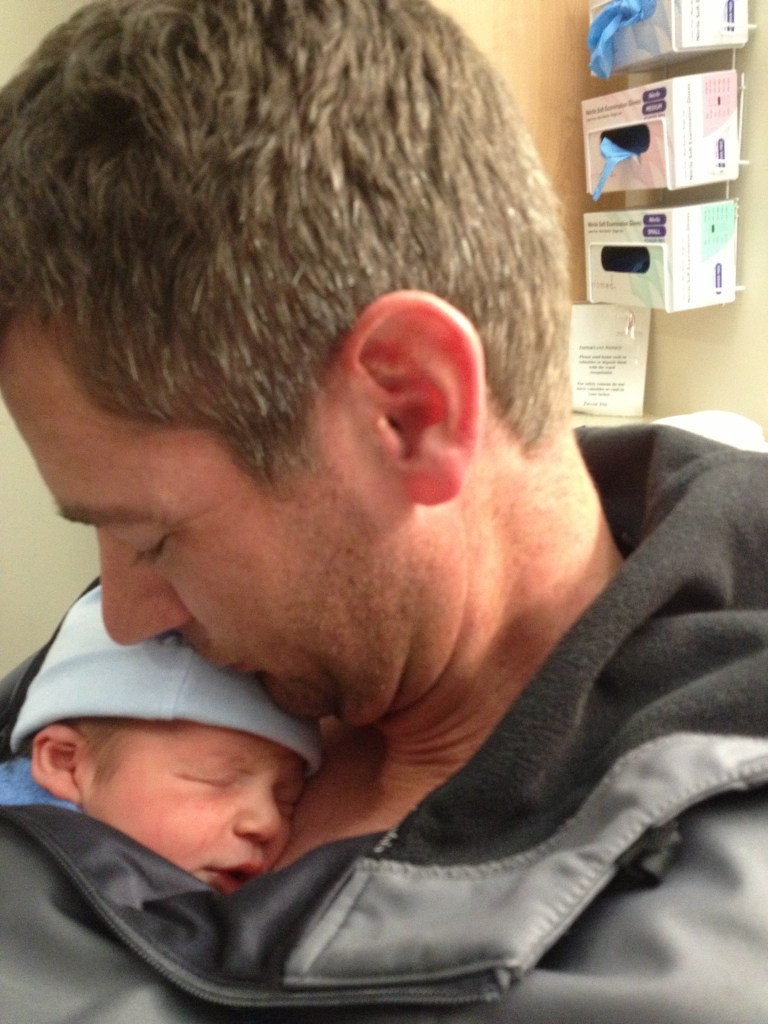
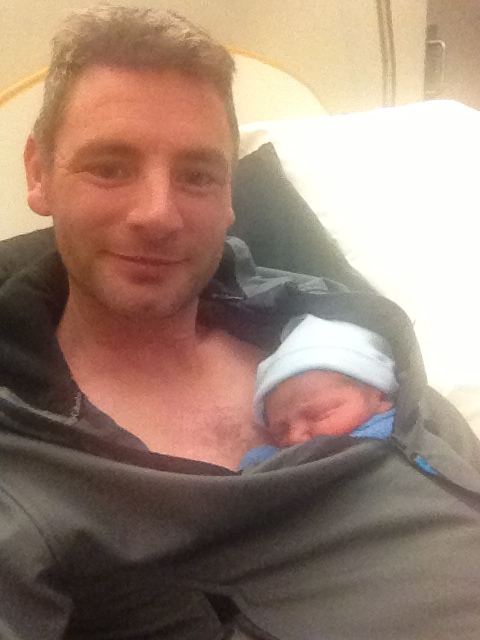
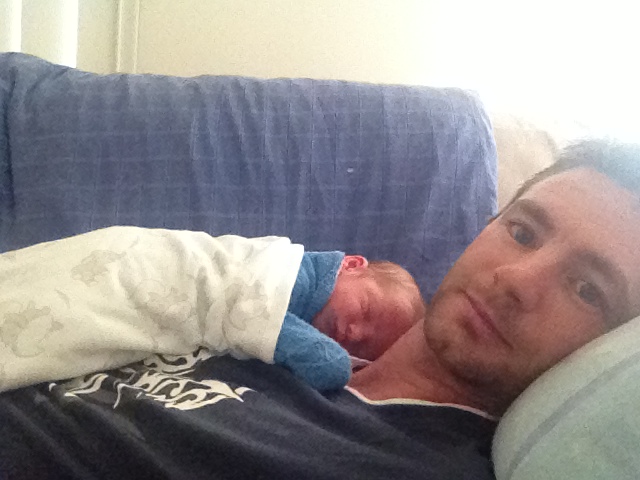
I flew home from Christmas Island and spent just over a month at home becoming a dad for the first time.
A couple of weeks after Harrison was born the ship returned to the base. I went on board to see what was going on and was told to make sure I had everything ready to go because we were sailing again within the next few days to possibly head back to Christmas Island.
I started to lose concentration again; I hadn’t expected to hear that, I was now a father, and Shayne and I were preparing for a wedding, I had no idea what to do next. I was torn between doing my job and wanting/ needing to be with my family.
Conflict
A few days later we sailed but, slowly. Apparently there was no rush for us to sail and we loitered around off the west coast for a few days waiting for orders to head north again. In my mind I saw this as a pointless exercise that was keeping me from my family.
We had scheduled a small arms pistol shoot one morning and I was tasked with overseeing the set up by a predetermined time. I asked two of my guys to assist with setting up but we were told that wasn’t the priority and we had to take care of another task first; just another task that in my mind was pointless, not a priority and a waste of resources.
Everything compounded into one at that point. My priorities for setting up for a shoot by a predetermined time conflicted with someone else’s priorities. We only had a small window of opportunity to set up and conduct the shoot and the other priority was no where near as important as our departments. I said, “You can all go and get fucked”. I then took myself off to my cabin to lay down with my headphones in and music on.
A short time later my Chief came bursting through the door wondering why the shoot was not ready and ordered me to his cabin. Once there, we sat and chatted and I said I couldn’t handle the conflicting bullshit, my mind currently can’t handle trying to process everything and I wanted to be with my family. I wanted to start being a dad.
The biggest struggle myself and many others have with serving, is trying to be there for your family and trying to do the best job you can for your country. I made the choice to serve, I want to serve but I also chose to have a family, and balancing the two can be extremely difficult.
Diagnosis

It was decided I should be removed from the ship as soon as possible. We were scheduled to arrive in Dampier the next day and lucky for me, dad was living in Karratha. We went to anchor the next day and I was sent ashore where I met up with dad. We got to have lunch and a rum together then he took me to the airport.
I flew back to Perth where I commenced regular sessions with the senior psychologist again. This time she also sent me to a psychiatrist in the city to be assessed for depression and PTSD. The psychiatrist was a funny old Asian man; funny as in he was quite humorous and quirky. He told me, even though I definitely was suffering from depression and PTSD it was only mild and he didn’t think I needed to be medicated, he then threatened to only put me on medication if I didn’t exercise. I promised I would start exercising.
It was recommended I take part in a PTSD course at the Hollywood hospital in Perth. At the time there were two courses being run, the first one was more specifically for military personnel which ran for a couple of months but it also incorporated an arts program; the other one was two weeks but aimed more for emergency services personnel.
I was given the choice of which one I wanted to do but it was suggested, because what I went through was more like emergency services work then that course might be more appropriate. I liked the sound of that one so that’s what I chose. I actually found it to be a pretty good course and the psychiatrists and psychologists running it were very helpful and easy to talk to.
During the course we discussed many different topics covering depression, PTSD, orientation and goal setting, demystifying mental health and trauma recovery, managing painful feelings, understanding trauma, managing trauma, managing anger, pillars of good health, communicating effectively, lifestyle balances, stress management, relaxation and meditation.
Acceptance
Acceptance is one of the hardest things to deal with. I kept telling myself there is nothing wrong but I couldn’t work out how and why I would act the way I did. I kept thinking I could work it all out and I didn’t need help from other people, but I was just making my mind worse by constantly thinking about it and never coming to any sort of conclusion.
At the start of the course all I could think about was I shouldn’t be there, my symptoms could not possibly be as bad as the others. There were two of us navy guys, a police man and a prison nurse; all males. On the first day there was a guy who had been in Bali for the Bali bombing but he was really struggling hard trying to work it all out, and because the rest of us were government workers he thought he shouldn’t be there, that he didn’t fit in with us. He walked out and we never saw him back on course.
I have found that after suffering from depression and PTSD and recovering, I have become quite Intune with what my triggers are so I can deal with most negativity and emotions early. It was very difficult to start with but once I accepted my brain now functions differently it helped me to cope better and it also helped me to recognise symptoms in others. I was able to stop Shayne from suffering Post-natal depression because I recognised signs that she had started to display.
By going through most of this with me, Shayne is quite quick to pick up on my signs as well and she’ll tell me or makes sure I go and do something for myself.
There are many different ways to help people cope with whatever they are going through. I have certainly had my moments but luckily my issues fall mostly into the “mild” category. I was never medicated for my problems and I am very grateful for that. I can’t even imagine how I would manage or try and cope while being on medication.
Everyone’s mind is different and trying to think and be positive can be very challenging. I have tried to be quite open and accepting over the last few years which I guess is the main reason I have done so well with recovery and bouncing back. For a long time I saw things as issues and road blocks, rather than experiences I could learn from.
I found researching and understanding how the mind works leading to depression and PTSD, and how to make me better, made me more accepting. It started to make sense why I was thinking a certain way, losing my temper over small and insignificant things in seconds, crying over nothing, or not being able to concentrate and focus on complex tasks. Thoughts become dominated by, “I’m hopeless, I keep getting rejected, I’m a failure at everything and to everyone, I’m not good enough, I’m not good enough for this world”. These types of thoughts can go over and over in your mind becoming habit and driving you further in to depression or even to the point of becoming suicidal.
After the navy psychologist in Cairns recommended, Change Your Thinking by Sarah Edelman to me I bought it but didn’t actually read it. While doing the PTSD course I decided to finally dig it out of one of my boxes that had been getting shoved around from one house to the next, and read it.

As I was reading it I started making note of certain lines and pages that were basically saying to me, “THIS IS YOU”. I was reading this book and saying to myself, “Wow I am not alone, this makes sense”. In her book Sarah covers Cognitive Behaviour Therapy (CBT), Recognising Faulty Thinking, negative thoughts, positive thoughts, managing anger, anxiety, self-esteem, effective communication, taking charge and being happy. As I was reading the book I, personally, found that the majority of the things she covered were common, every day, behaviours but barely any of it was at the forefront of my mind or being put into practice.
It was time to man up and get myself better.


Leave a Reply