Trigger warning: Descriptions and photos contained in this article may trigger an adverse emotional response in some readers. If any of this causes stress or anxiety please seek professional help.
The following is a recollection of events from my memory of the SIEV 36 incident and is in my words and no one else. My point of view may differ slightly from others but I believe this to be as accurate as I can remember.
Time to move
I eventually went up to the bridge and saw the CO (Commanding Officer) to see if there was anything I could do up there. I couldn’t go down aft to assist, I felt angry, and refused to go down there. So much credit though goes to those personnel blown off the SIEV and then to come back and save lives was truly amazing, and worthy of every praise and award they received.
I sat at the helm and just started to take everything in that was going on. We started to get underway, slowly coming up in speed, we needed to move; we couldn’t sit there any longer. We were out in the middle of no where, hundreds of miles away from any proper assistance. We initially couldn’t go too fast because we had make shift shelters of rope and rugs to keep the sun off patients, and if we came up in speed too fast all that could have blown away.
I sat at the helm, as well as keeping an eye on the camera which was monitoring what was happening down aft. Soon we were told to make our way to an offshore production platform called Front Puffin. Not long after we had started to get underway the CO was on the phone next to me, he hung up, looked at me and said, “You have my permission to phone your mum”. I just looked at him blankly, wondering what the hell he was talking about. He repeated what he had said and told me I needed to phone my mum as she was worried about me. I asked him how she could possibly have known what had just happened. He shook his head and said, “I don’t know but you need to call her and find out”.
I phoned mum and asked her what was up, she said she had heard on the radio there had been an incident and several navy sailors had been killed. I told her I was fine and we were just cruising around but were making our way to Darwin and I would talk to her when we arrived back in port. I couldn’t tell her what was going on so I was dismissive, but she knew I was in the thick of it.
Apparently as soon as the Search and Rescue call went out, someone back on land went to the media without having all of their facts straight.
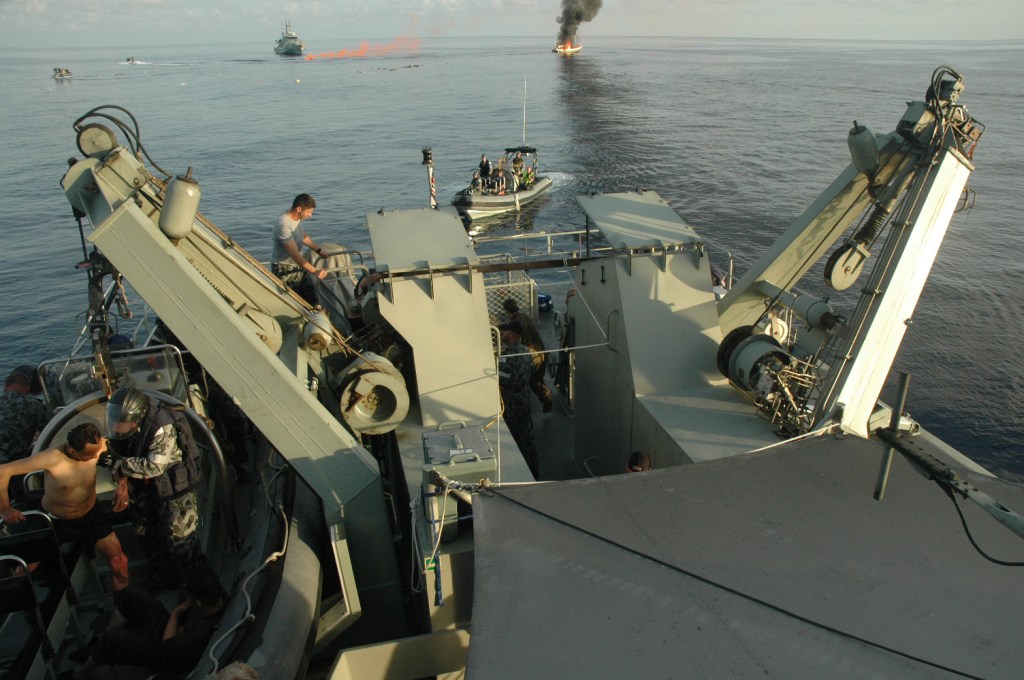
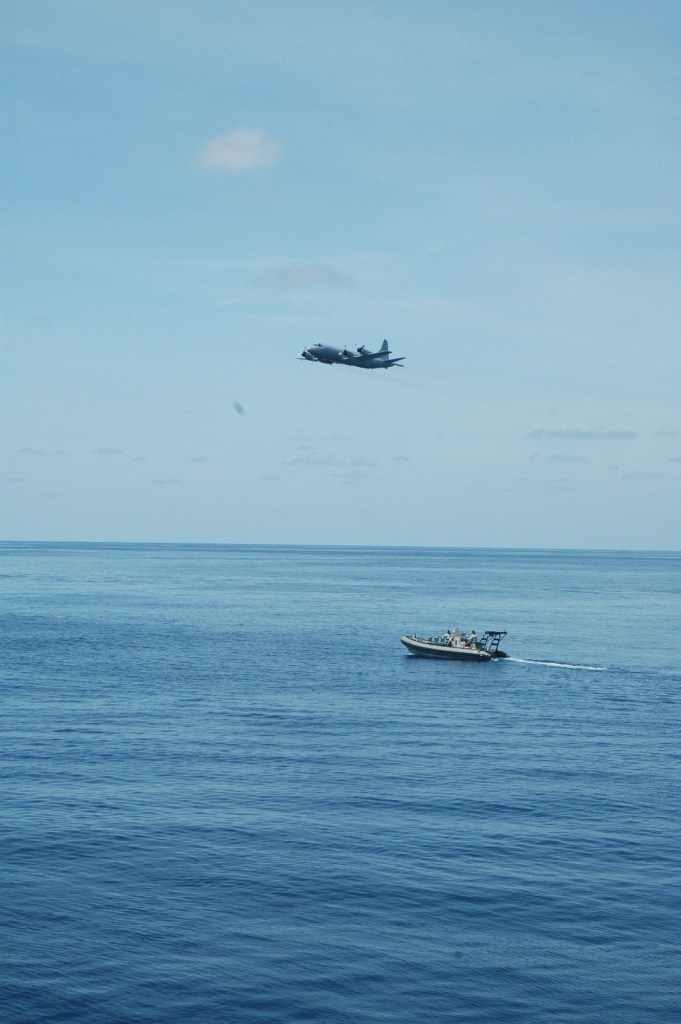
We were making good speed towards Front Puffin and the weather was still brilliant. Not long after we sighted Front Puffin on the horizon we deployed one of our RHIBs to start recovering medical air drops from a RAAF AP-3C Orion aircraft. They were doing fly-bys past Front Puffin and our RHIB would recover the air drops.
This all still added to a movie like scene. Here was this Patrol Boat going as fast as we were able to, with people’s lives hanging in the balance on a small deck and there’s a tanker, sitting in the ocean with an RAAF plane flying past around 50 metres off the water throwing medical supplies out the back.
Call to action
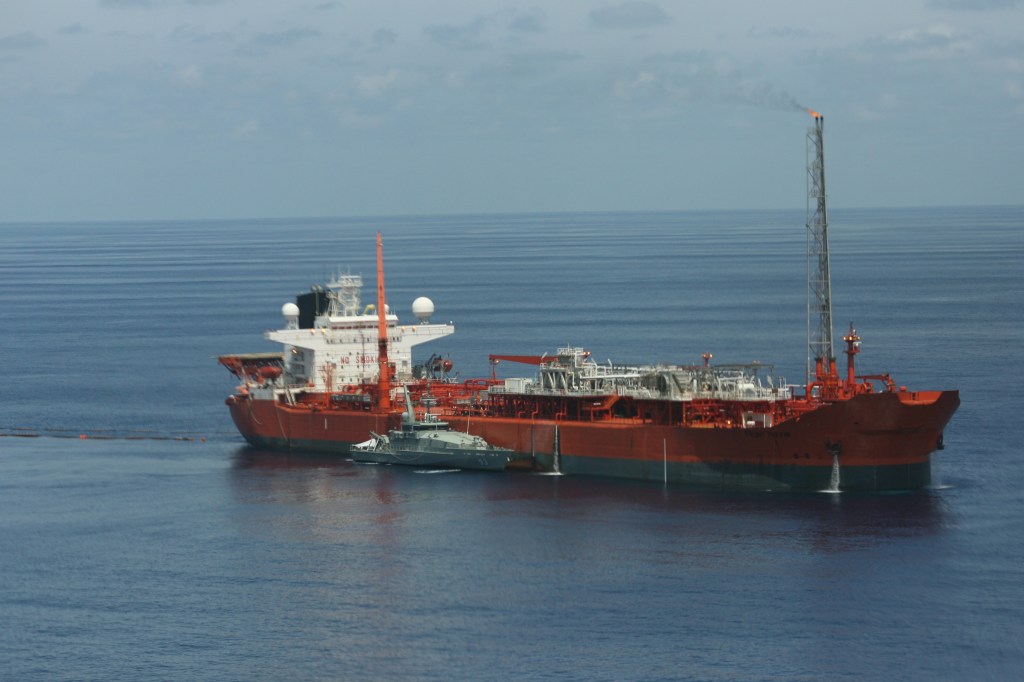
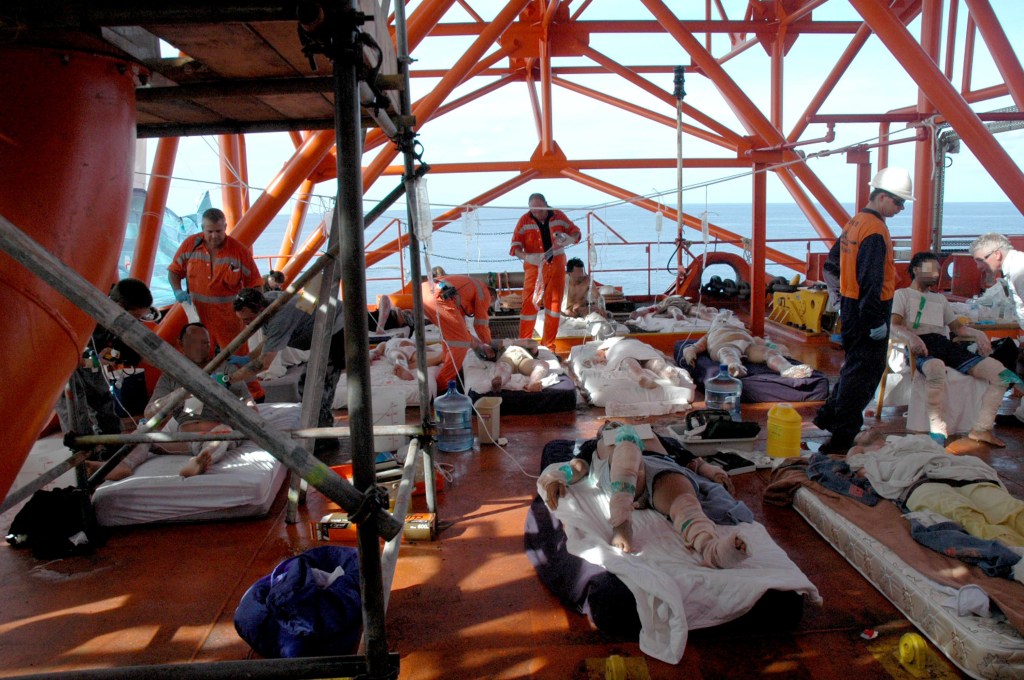
When Front Puffin received the call about us coming in they shut down production, mustered the crew and told them what was going on. Their crew were brilliant and went about grabbing their own mattress’ and pillows, rugs and blankets and doing whatever they could to ensure their inbound patients were going to be comfortable as possible. They did a fantastic job supporting us that day.
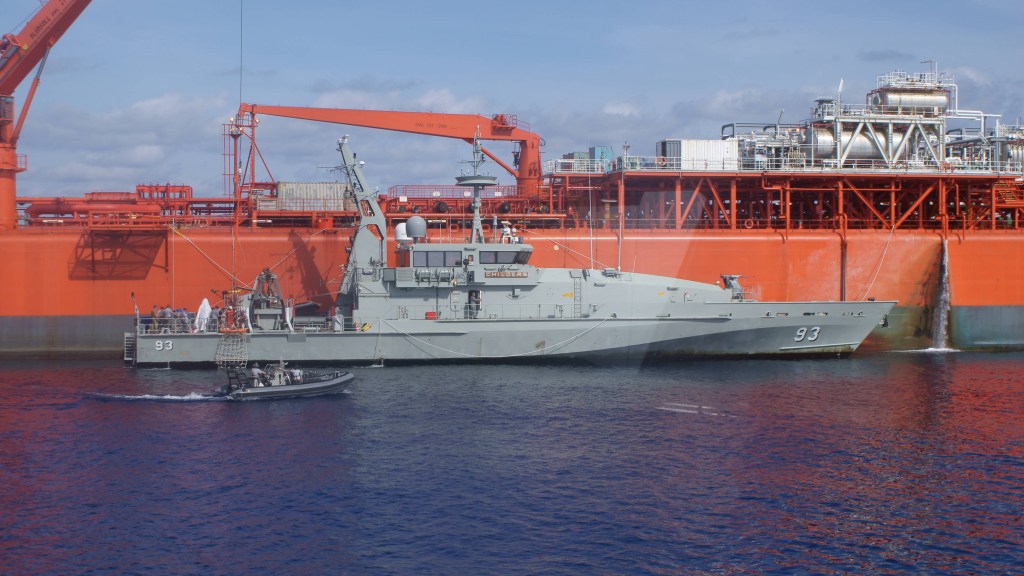
We came up alongside the tanker and our CO held the boat there while we got our lines across; certainly not an every day occurrence for us. There was a huge lead on the berthing lines so all we could do was use four single lines. A couple of us took charge of three lines from mid-ships to the bow and the fourth was passed up from the quarter deck, making sure we were secured to Front Puffin so we could start transferring patients.
While this was happening the air drops continued, it was an impressive sight to watch and all in all there were about 100 boxes dropped. Apparently they ran out of air drop boxes and had one more lot to launch. Unfortunately from the RHIB’s perspective they were initially taken aback because the last lot of supplies were wrapped up in a wetsuit, so all the RHIB crew saw was a man shape figure flapping out the back of the aircraft. They quickly realised it was only a wet suit and raced in to pick up the last lot of supplies.
We were positioned alongside Front Puffin for around six hours, and pretty much the whole time myself and two or three others remained on the port side keeping an eye on the lines because of the strain that kept coming on them.
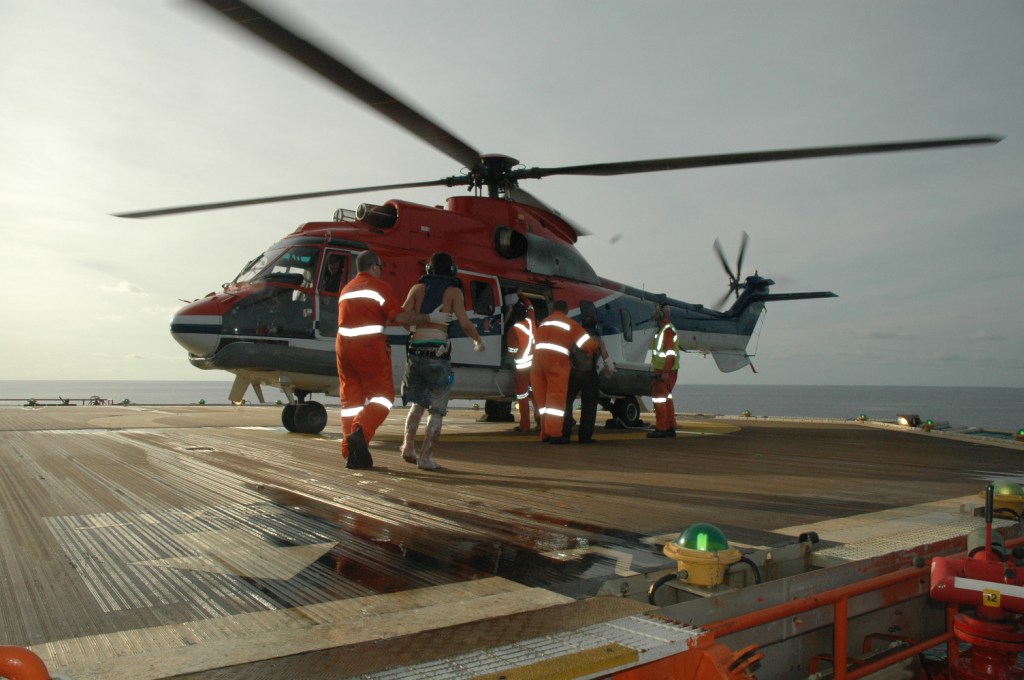
Front Puffin could only transfer one person at a time, it was a long slow process getting the patients into the basket and craning them onto the deck above. It seemed like forever but soon enough the first rescue helicopter arrived to start transporting patients back to land.
As sunset closed in we only had a few patients left to lift but we had to stop the transfers every time a helicopter came in because the crane boom would have been in the way of the helipad.

Over six hours or so our berthing lines to Front Puffin had been getting punished from rubbing as we moved up and down with the swell; it wasn’t a very big swell but it was enough to keep wearing away at the lines.
Not being able to do much else at that point I went below to finally try and have something to eat, I had only just had a couple of mouthfuls of lunch when the CO made an announcement that line four, the line holding our stern in had parted.
The CO then did an amazing job of taking control of HMAS Childers using our own propulsion and held us there for about another hour until the last of the patients was transferred off. As soon as the last one was being lifted we let go our lines and moved away from Front Puffin. When we pulled line one in it was only just barely being held together, it was worn most of the way through.
Darwin bound
HMAS Albany had left us a few hours earlier after transferring what patients they had left, over to us. Five people from SIEV 36 died that day and HMAS Albany had two of the bodies on board and took them back to Darwin. We had one in our freezer which stayed there until we arrived in Darwin. The other two bodies were never found.
We made sure everything was secured, and the deck was clear, and then made for Darwin. I went back up to the helm and remained there as long as possible so the other guys could rest and eat. I think I stayed there until around 2300h when I was told to leave. I went to bed and had no trouble sleeping but was still buggered the next day.
We slipped into Darwin virtually unnoticed. Once we were alongside we were in lock down and no one was allowed on or off the boat until we had been debrief and the dead body removed by the Coroner and Quarantine.
I was security sentry to ensure we didn’t have any unwanted people try and come on board and I was there while they removed the body from the ship. The CO saluted as the body was carried off the ship, I just stood there and watched.
There was still work to be done and we set about cleaning and scrubbing the boat from one end of it to the other, as well as ditching all our contaminated gear into a cage for forensic examination.
Professional cleaners were going to be organised to come in over the next day or so and we weren’t allowed to stay on the boat while it was cleaned, so we were given three nights in hotels in the city.
On one of the nights, a group of us were wandering around town when a local set off fireworks right near us, every single one of us froze and someone even broke down in hysterics. Passers by just gave us funny looks wondering what was wrong with us. It was difficult to process that something like a firework could trigger a reaction, taking your thoughts back the incident, and your mind making you think you are possibly in danger again.
Time for home
A few days later we were asked if we would like to stay in Darwin for ANZAC day but the majority decided we wanted to get back to Cairns.
After a long few days in Darwin and being away from home, we finally sailed on April 24th. The next day we held a small ceremony on board for ANZAC day while we made our way back to Cairns.
In the years since, the incident has affected everyone involved in different ways. I struggled for several years but the stubborn side of me made me push forward. I overthought too much which prolonged any sort of recovery for a while, but I eventually got to the point where I said to myself, “You can either let this continue to plague you and keep you down or you can tackle it head on, learn, understand and overcome your own negative thoughts.” It wasn’t easy, it took time, but I am definitely in a much better place now than I was for several years, and mentally I am a much stronger person that I ever was.
Recognition
Chief of the Defence Force Commendations were awarded to Lieutenant Commander Barry Learoyd the Commanding Officer of HMAS Albany, Lieutenant Commander Brett Westcott the Commanding Officer of HMAS Childers and Corporal Sharon Jager TSE.
ADF Gold (Chief of Joint Operations) Commendation was awarded to Chief Petty Officer Rachelle Burnett.
ADF Silver (Deputy Chief of Joint Operations) Commendation was awarded to Petty Officer Cheryl McCabe.
ADF Bronze (Deputy Chief of Joint Operations) Commendation was awarded to Petty Officer Rachele Karmiste.
ADF Gold (Chief of Joint Operations) Group Commendations were awarded to the Patrol Boat crews ARDENT FOUR and ASSAIL TWO.
Eighteen personnel, including myself, were also awarded the Group Bravery Citation. A further six personnel were awarded a Bravery Award for their overall efforts on the day.
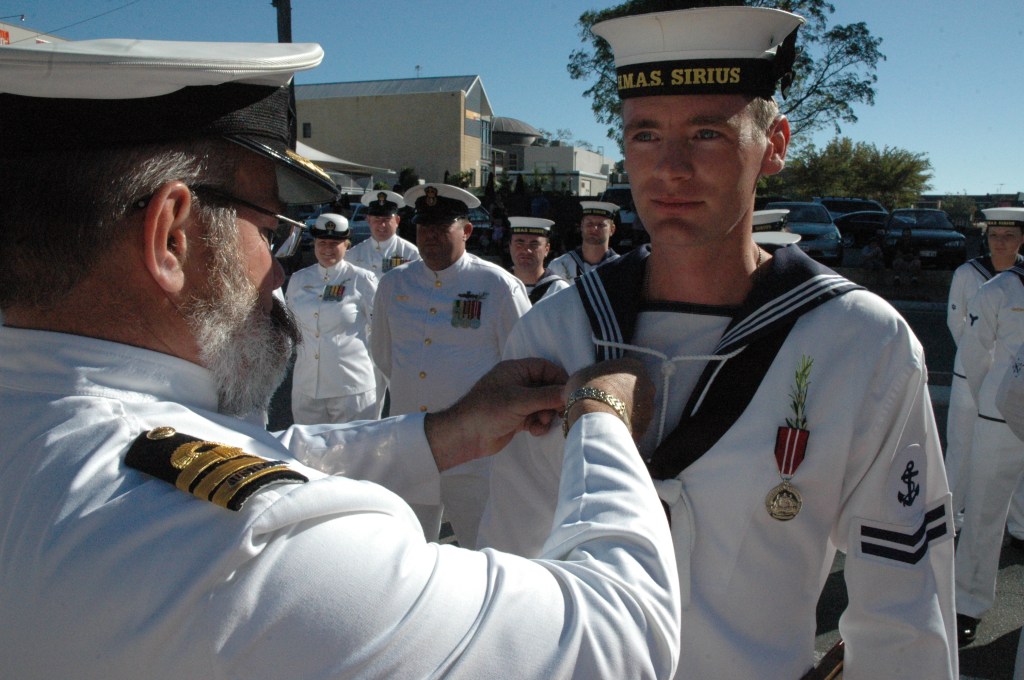
Being presented with Gold Commendation 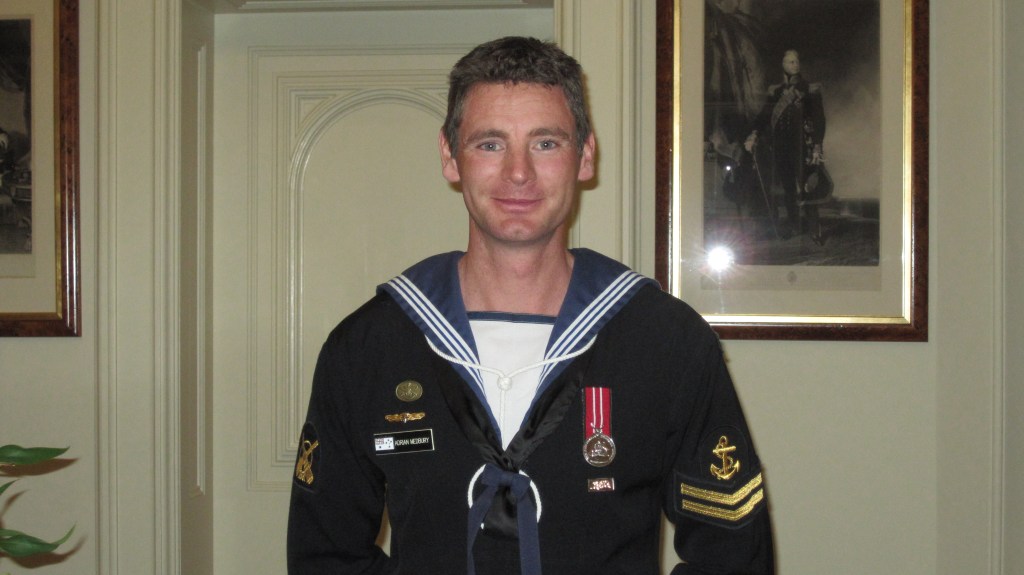
Group Bravery Citation at Government House Hobart
In my post, Navigating Depression- Part 3, I talk about my part in the Coronial Inquiry.


Leave a Reply